
Category: Uncategorized
Untitled [the coming collision]
[this draft is pretty rough but I’m going to post it so I have to look at it again. June 2019]
Someone is going to do a study of what happens in a client relationship. They are going to prove that interpersonal influence between people happens at an emotional level. This is hardly news, but no one yet has presented the influential, definitive study that brings it into widespread acceptance.
Finance and economics have been revolutionized by the study of how people actually make decisions. It turns out this is a messy and biased process. One model suggests we have two parallel processors, one intuitive and emotional and the other logical and deductive. The intuitive processor is more powerful and dominates our behavior.
The intuitive processor is very fast and can process many things simultaneously. It runs our body and our physical behavior. It doesn’t seem to be entirely emotional but it includes our emotional self. Our conscious awareness of it involves physical sensations, emotions and feelings. Our experience of it is mostly effortless. It holds our wants, fears, and values.
The deductive processor includes our conscious attention, our thoughts, and our language. It is Homo sapiens’ newest part. It processes (holds in awareness) a few things at a time, maybe 5 to 7 things[1].
I like to think the intuitive emotional processor actually makes all our decisions. The deductive rational processor influences it with stories, plans, and strategies to get what we want. The emotional processor acts on those. But it does all the doing
There is a lot of entertaining research by now about how we decide. We like the same wine better when we believe it’s more expensive. We can’t keep our New Year’s Resolutions. Advertisers push our buttons constantly with great success.
We routinely choose things which make us less happy, healthy, or wealthy. We make most choices, for better or worse, in the blink of an eye[2] and have dozens of emotional and cognitive biases in how we make them. And it’s not even clear that we care that we are like this.
The compelling research that is missing is into how this process works in relationships with other people. There are a few researchers who have studied romantic relationships[3].
But no one has really presented the compelling story of what makes us choose in a sales dynamic, or when influenced by a leader.
We’re going to find the same thing we did about picking wine or shoes or something off the menu. It is a biased and emotional process. In other words, it’s about our feelings.
Like many other “discoveries” of behavioral economics and finance, all of this is hardly unknown to humankind. Someone just needs to do what Kahneman and Tversky did with their groundbreaking article in the 1970s.
Sections to complete:
What alumni of the Stanford Graduate School of Business discovered about its Interpersonal Dynamics course in the years after they graduated.
How emotional connection creates influence, and how that influence is a source of power in organizations, as defined and studied by Stanford’s Jeffrey Pfeffer.
– – – – – – – – – – – – – – – – – – – – – – – – – – –
[1] It might only hold one thing at a time, but quickly cycle through a handful of them so that it looks like we are tracking 5 to 7.
[2] And then spend enormous amounts of time and energy making up arguments to explain why we made them when often we have little idea. Our “logic” often looks more like the arguments on one side of a court case than the deliberations of a judge or jury.
[3] Notably John Gottman. Also Sue Johnson.
Use your elephant, Luke
I am riding my elephant and I come to a tree fallen across our path. Do I,
- Get off the elephant and try to move the tree with one arm while trying to restrain the elephant with the other?
- Allow the elephant to push the tree out of the way. The elephant wants to. He has already agreed to walk this path?
Use your elephant, Luke.
Outline for a real article on this.

Attachment (draft)
- Connection
plus
- Conditioning (a process of the adaptive unconscious, aka red brain) which shows up as feelings and unconscious behaviors.
- Ideas (a process of the cognitive mind, aka blue brain) about connection in general and with specific other people
The two processes influence each other, around and around. Together these create our expectations. They make our “attachment personality.”
Around and around, and then engaging with other people.
These processes form our attachment bonds, aka relationships.
Like all personalities, our attachment personality is remarkably (and I’d argue unexpectedly) stable. That can be good or a problem.
Free market omnivores (draft)
This is our challenge:
- Our freedom of choice.
- The way we make choices.
- Unexpected consequences of markets.
In The Omnivore’s Dilemma, Michael Pollan describes how food travels from the earth to our tables. Great book in its own right.
The problem referred to in the title is that we have to choose what to eat, in a way our ancestors did not. And we make choices that are not compatible with our physiology.
Other research shows that our emotional brains make the choices.
So big industrial food companies cater to our emotional brains. These consumer brand companies are not evil. They are just doing what sells food.
But what sells food isn’t good for us. What sells food is what pushes the buttons on our emotional brains. So the food companies evolve to sell food that our elephants pick, like Lucky Charms or McDonalds or Pizza Hut.
Even “healthy” food is sold to our emotional brains. Consider Pollan’s “American Pastoral” for example. Or me eating bran muffins because of newspaper stories in the 1990s.
This is behavioral economics at its best (or worst).
A yoga video for older, plumper people
reminder all posts are drafts, or I will never get them done enough to post.
This was originally entitled yoga for old, fat men. And I decided the title above was less violent.
Standing pose. Things to note.
- Initially I can reach about half-way down my shins.
- My feet are the only yogi-looking thing about me. And maybe my bald head.
- I can’t stand with my toes and ankle bones touching, but if I “spread the backs of my knees” by rotating my thighs back and out, then I can.
- Spreading my legs helps make space for my belly, which really helps, especially being able to breathe.
- Breathe and relax without stretching the arms towards the feet.
- Bend the knees and hold each big toe with 2 fingers.
- Then breathe and relax and gently straighten the knees more.
Finish with Jefferson Curl cycle.
- Fall over like diving over your hips.
- Jefferson curl up.
- Arch back.
Talk about
Breathing
Mukunda
Carl Rogers and the fully functioning person
I recently came across a famous quote from Bruce Lee (the noted neurosocialpsychologist):
“You must be shapeless, formless, like water. When you pour water in a cup, it becomes the cup. When you pour water in a bottle, it becomes the bottle. When you pour water in a teapot, it becomes the teapot. Water can drip and it can crash. Become like water my friend.”
This reminded me of Carl Rogers essay on the fully functioning person who is living “the good life.” When I hear about mindfulness I am often reminded of this essay by Rogers.
Carl Rogers was one of the 20th century’s most influential psychologists. His essay on the Fully Functioning Person was “an attempt to spell out the picture of the person who would emerge if therapy were maximally successful.” Rogers wrote he “was somewhat frightened by the fluid, relativistic, individualistic person who seemed to be the logical outcome.(1)”
This was based upon his observations of patients whose therapy was successful and who had subsequently made good progress towards, or were living, what he calls a good life. Rogers was surprised and a bit concerned to observe that these people never reached a particular state of being, a homeostasis. This was in contradiction to many influential psychological theories of his time. Instead, he writes:
If I attempt to capture in a few words what seems to me to be true of these people, I believe it it will come out something like this.
“The good life is a process, not a state of being.
It is a direction, not a destination.
The direction which constitutes the good life is that which is selected by the total organism, when there is psychological freedom to move in any direction.
This strikes me of a pretty good description of someone who is living mindfully.
Rogers found The characteristic qualities of this “process of movement” which “crop up in person after person” were:
- An increasing openness to experience.
- Increasingly existential living.
- An increasing trust in his or her organism. There is a wonderful description of decision-making which foreshadows the work of Kahnemann and Teversky and dozens of books since then such as Blink and The Righteous Mind.
—— Notes ————-
(1) This was the inspiration for his original paper, which he never published but circulated among friends and colleagues for feedback. Later when he considered the paper for a collection of essays and speeches titled On Becoming a Person, he found “many of its most central themes had been absorbed, and perhaps better expressed, in other papers.” So he used a later paper on “the good life” which “expresses its essential aspects in briefer and more readable form.”
New overview draft (maybe dupes some material)
Jeff Pfeffer and the Sources of Power
Distinguish between sources and uses of power
Distinguish between power and force
David Bradford and the Sources of Influence
Distinguish again between influence as a source or power and how we use it, and the dynamics of using influence instead of other sources
Baba Shiv and our emotional brains
They are making most (possibly all) of our decisions
Cognitive brain navigates – emotional brain decides where we want to go. It accepts or declines suggestions from cognitive brain.
The Big Intersection which runs our world: emotional brains interacting with other emotional brains.
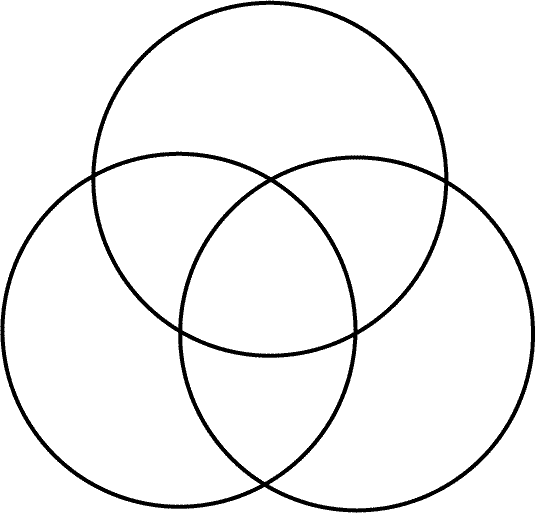
Working with the unconscious-unconscious conversation
John Gottman
Cesar Milan
Advertising
Inspirational leadership
Mindfulness
An intellectual relationship with my unconscious Self
…it is only possible in certain ways.. searching for clues at the scene of the crime.
[Where do these items connect ]
Unconditional positive regard
A Primer of Economics
Lesson 1 – Division of Labor and Trade.
Imagine two villages a very long time ago. In each village, everyone shares. Everyone works at everything and shares in everything. One village has better apples nearby. The other has better fishing. They exchange and value is created.
Carrying the apples and fish is also value. From the village with more abundant apples, we carry apples to the village with more abundant fishing. That adds value for which they will exchange more fish.
For this to work, expectations are key. We collect and carry apples because we expect you will give us fish. They catch extra fish expecting the apple gatherers to come for them.
We don’t have to own anything for this to work (more on ownership later). The apples are near our village, the fish are near theirs. They could walk over to collect apples, and we could walk over and fish. The simple division of labor and trading create value.
Lesson 2 – Prices
How many apples are worth one average-sized fish? We might start with as many apples as one person can carry in exchange for as many fish as that person can carry. But that is not the best price.
Lesson 3 – Ownership
In our simple example, everyone contributes to the village and everyone shares. We all farm together, forage together and hunt together. Everything belongs to everyone.
We might even share our land with other villages, but eventually we will claim territories. This starts in the animal kingdom and extends to humans.
That means we may have to fight for and defend our territory.
We may also have ownership within our village. If I spend many nights making a tool or a weapon to hunt, I can claim it as mine. If my tool or weapon is more skillfully made than those made by others, I own the benefits of that superior tool.
Lesson 4 – Expectations – Confidence and Information
For all of this to work, we have to have confidence in what to expect. Before I do the work catching extra fish to trade with you, I have to expect that you will come with apples before they spoil.
And that you won’t just come attack me and take the fish.
And you have to have some confidence I’ll have fish to trade before you pick the apples and carry them all that way. And that I won’t steal them from you, or that robbers won’t along the trip.
In addition to fish and apples, information is created, shared, and exchanged through our trading.
This part of the economic process is where governments, from tribal chiefs to kings to legislatures, bureaus, and central banks, play their most critical important role. And it is arguably the least understood and greatest area of malpractice and outright mischief.
Lesson 5 – Side Effects
Which brings us to side effects.All economic processes, all decisions, have side effects. This is mathematically inevitable because economic systems, at least those to date on our planet, are closed systems with feedback loops.
To defend ourselves and our territories we may have a powerful Chief. He organizes and leads our conflict with other tribes. But then the chief may use his powers to claim extra rights and privileges for himself and his friends and family.
Lesson 6 – Productivity (Technology and Innovation)
Through division of labor we can develop can lead to specialized skills.
Instead of having everyone share in every task, it makes sense to divide tasks. It doesn’t make sense for the whole village to walk a long ways to the hunting ground and wait all day for prey. It only takes a few of us, and the others can stay home and farm or fish or forage. This division of labor creates value. In addition, we can develop specialized skills.
Specialized skills change the division of labor. The new ox-drawn plow requires less people for farming.
Within the village this can work even if everything is shared. Some farm, some gather, some care for children and elders and prepare food, some hunt, some fish. But all of these are contributed to the common pot.
This sharing requires norms (morals) to enforce sharing and discourage free-riding.
Lesson 7 – Resources (Territory, Sustainability, and Generations)
Natural Resources
Environmental side-effects
Sustainability
Inter-generational transfer (or not?)
Lesson 8 – Regulation
It’s the referees, dummy. And the Commissioner.
The issue with regulation is not how much more or less, but how effective.
Lesson 9 -Information Technology
From cuneiform tablets to printing presses to coffeehouse pamphlets to yellow journalism to radio and television to the internet… this is the 800 pound gorilla.
To Be Fully Present
One of a series of unedited “top of mind” posts which are works in progress.
Today I will practice being fully present.
What does it mean to be fully present?
And what about “authenticity” which is so often mentioned?
Being fully present means being fully present to my emotions. Most of us have become conditioned to tuning them out to some degree, but they are always there, like a group of children, impulsive and spontaneous and filled with the energy of life. Although we become conditioned to tuning them out, we all have multiple emotional reactions to everything around us in each moment.
Being fully present means being present to my intentions and values. These also come from our emotional brains. In fact, they begin in the deepest parts of our selves. They start with our love of life, our love of family and friends. They are arise from our instincts and are shaped by the wisdom of our experience.
Being fully present means being present to the power of choice. Of all the qualities which distinguish us as humans from the other beasts, choice is the monarch. It’s sovereignty precedes even language and logic. Choice expresses our values, intentions, and feelings.
The consequences of choice, in turn, shape who we become over time. This dynamic cycle is what makes choice so powerful. In 30 days we can completely change our self and our life. The impact of our choices over years is hard to overstate. It is even hard for us to comprehend.
There is much talk these days of being authentic, although the meme is hardly new. A person’s authenticity is one of those qualities which is instantly familiar and therefore seldom clearly defined. We all recognize when someone is authentic and we generally admire it and yet past that point we have little clarity about “authenticity.”
Is authenticity key to interpersonal influence or connection? Sometimes it seems to be.
Is authenticity key to leadership? Sometimes it seems to be.
It authenticity key to success or happiness? Sometimes it seems to be.
The answer to all of those questions seems to be yes and no.
What if authentic is what others see when we are more fully present? Then the influence of that authenticity surely depends upon what we are present to:
If I am present to and with emotional reactions, I am authentic. I am spontaneous and impulsive and perhaps endearing but probably also childish and self-indulgent.
If I am present to and with my values and intentions, and if they are authentically congruent with one another, I am authentic. I am also powerful and inspiring. I may also quickly become tiresome and pedantic.
If I am consistently present to and with my power of choice, and those choices serve my values and intentions and emotions, I am authentic. My emotional reactions and values and intentions all show at times. I am likely to be experienced as engaging, responsive, and available. I am probably a leader in whatever situation or context in which I am present this way.
Done for now. End of thoughts. Emptied out. Not sure what to do next with these. I choose to try something new.
 Elephants and Economics